ANTI-MARKETING: THE STRATEGY THAT DOESN'T LOOK LIKE ONE
5 min READING TIME
Have you ever scrolled past a brand post that made no sense, then found yourself thinking about it three days later? That's not a coincidence. That's what happens when a brand is confident enough to not explain itself. It's called anti-marketing, and it's one of the most effective things a brand can do right now.

Vaseline invited "scientists" to test if viral beauty hacks actually work. Guinness replaced its logo with a silhouette and trusted fans to fill in the rest. Aerie put Pamela Anderson in a campaign and led with what they refused to do. None of it felt like an ad. All of it worked.

Here's what that actually is, why it's cutting through right now, and what it looks like if you're still building your brand rather than sitting on decades of equity.
WHAT DOES ANTI-MARKETING ACTUALLY MEAN?
Anti-marketing is not the absence of marketing. It's marketing that refuses to look like marketing. Instead of pushing, it pulls. Instead of explaining, it trusts the audience to get it.

It's a posture, not a tactic. Restraint over reach. Depth over frequency. Meaning over volume. You can't do one anti-marketing post and call it a strategy. It's the cumulative effect of a brand that consistently doesn't feel like it's trying too hard.

It has become much more relevant in 2026 as AI-generated content floods feeds and trust in traditional advertising keeps dropping. When everything looks like an ad, not looking like one is the differentiator.
When everything looks like an ad, not looking like one is the differentiator.
WHY IS IT WORKING RIGHT NOW?
Because the feed is broken and everyone can feel it. 56% of consumers report seeing AI slop often or very often, and 66% are more selective about what they engage with than a year ago, per Sprout Social's Q1 2026 Pulse Survey. [Sprout Social, 2026] When everything looks like an ad and most of it feels fake, the brands that don't look or feel like that have the whole field to themselves.
here’s what it looks like in practice:
Vaseline invited "scientists" to test hundreds of viral beauty hacks and awarded a verified seal to the ones that actually worked. No celebrity. No overblown claim. Just proof. It felt credible because it was.Vaseline Verified campaign video 2025 - scientists testing viral beauty hacks on TikTok and Instagram as example of credible anti-marketing strategy
Same principle, different execution
Aerie's 2026 campaign starred Pamela Anderson and led with what the brand refuses to do: no retouching, no AI. Not a new idea. A promise they've been keeping since 2014. That consistency is what made it land. Aerie surpassed $2 billion in revenue, with executives naming marketing as a key growth lever. [Marketing Dive, 2026]
And then there's the most extreme version
For the Six Nations 2026, Guinness reduced its entire identity to a pint-shaped silhouette cut into a beer mat. No logo, no wordmark, no tagline. Just the shape. That level of restraint is only possible when a brand has spent decades earning it.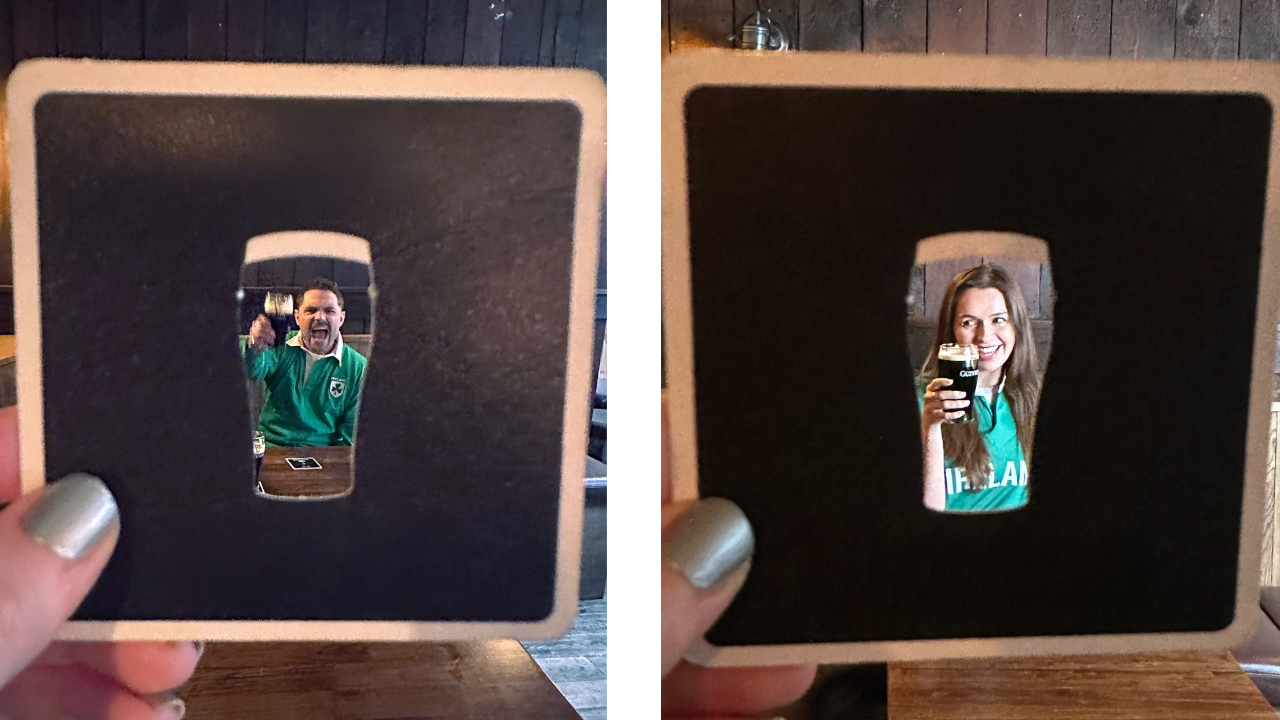
WHAT DOES IT LOOK LIKE FOR A BRAND IF YOU'RE STILL BUILDING IT?
You can't do what Guinness did. That only works because everyone already knows the shape. If you're two years into building a brand, you don't have that yet. And that's fine.

For an emerging brand, anti-marketing means being specific instead of generic. Honest instead of polished. Captions that sound like a person, not a brand account. Showing the process instead of just the result. It's also about what you refuse to do. The brands standing out right now have a visible point of view on what they won't be.
What This Looks Like In Practice?
Write like a person, not a brand account. If it could have been generated by AI, it probably won't land.Show what most brands hide: the process, the decisions, the behind-the-scenes. Specificity builds trust at any scale.Have a visible point of view on what you won't do. That clarity is more magnetic than any campaign.Build content your audience wants rather than content you need them to see. That distinction changes everything about how you show up.
Anti-marketing is not a trend. It's a response to a real shift in how trust works and how attention moves. You don't need Guinness-level equity to do it. You need clarity about what you stand for, consistency in how you show up, and enough confidence in what you're building that you don't need to oversell it.