5 min READING TIME
You're scrolling right now. You've probably already skipped past three ads, half-watched a Reel, and checked your phone twice since opening this. That's not a focus problem. That's the attention economy doing exactly what it was designed to do.

69% of consumers say brands have five seconds or less to capture their attention. Not five minutes. Not a paragraph. Five seconds. [Adobe 2026]

The brands that understand this are not necessarily the biggest ones. Notion built a $10 billion company without meaningful ad spend. The difference is not budget. It's what they chose to say, and whether it was worth stopping for. Here is what that looks like.


FIRST, SOME CONTEXT: WHAT IS THE ATTENTION ECONOMY?

Every brand, creator, news outlet, and cat video is competing for the same thing: your attention. And unlike money, attention is finite.

The more content that exists, the pickier people get. It's not that people can't focus. It is that they've gotten very good at filtering out anything that does not immediately feel worth it. For brands, that changes everything.
1. WHY IS NOBODY STOPPING FOR YOUR CONTENT?
Your audience isn't distracted. They're making very fast, very accurate judgments about what deserves their time. And generic content doesn't just underperform. It actively trains your audience to scroll past you. 45% of consumers stop engaging with brands that over-promote, even when the content is relevant. [Adobe 2026]

More is not the answer. More interesting is. Because frequency without value creates fatigue, not loyalty.
EXAMPLE:
Clarius is a medical device brand. Not exactly the easiest thing to make someone stop scrolling for. One of our clients manages their Instagram and openly admits to "giving herself a little chuckle trying to make Clarius somewhat current and sexy." That commitment to finding a genuinely interesting angle for a niche brand is exactly what earned them 6,000 new followers in 12 months, a 32% growth, starting from 18,900.

The content didn't go viral. It just became worth stopping for.

What Does This Mean For You?
Hook first, context second, product third. The first second is the whole pitch.If your content could belong to any brand in your category, it's not working hard enough.The brands earning attention are not necessarily louder. They're more specific, more interesting, and more worth the stop.
THE TAKEAWAY:
You don't have an attention problem. You have a first-five-seconds problem.
2. WHERE DID YOUR AUDIENCE ACTUALLY GO?
Public feeds are getting noisier and less trusted. Audiences are migrating toward spaces that feel intentional: newsletters, private communities, podcasts, creators they follow by choice. Creator content now accounts for 44% of brands' paid media creative assets on average. [CreatorIQ 2026]

Trust travels through people, not banners.
EXAMPLE:
Notion reached 100 million users and a $10 billion valuation without meaningful ad spend. [Forbes 2024] It grew through Reddit, YouTube, and creators who built their own audiences around it. The audience found Notion in spaces they already trusted.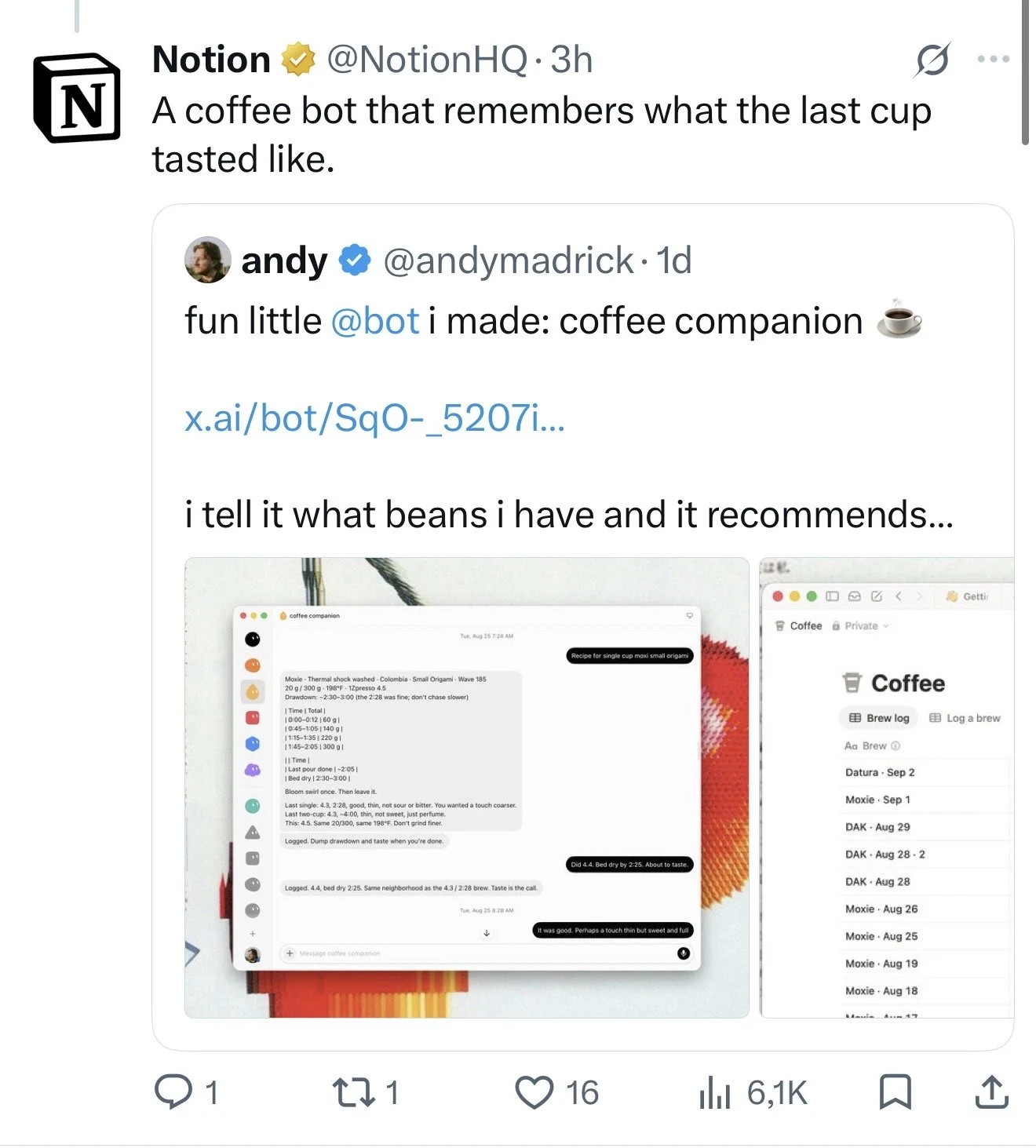
What Does This Mean For You?
An email list is an attention strategy. Your audience is there by choice, not by algorithm.A small, invested community drives more word-of-mouth than a large, passive one. Size is not the goal. Depth is.Paid reach resets every campaign. Owned channels and creator relationships compound.
THE TAKEAWAY:
The most valuable attention is in the spaces audiences chose to be in. Build presence there.
3. IS POSTING MORE ACTUALLY MAKING THINGS WORSE?
Audiences instantly detect content made because someone had to post versus content made because someone had something worth saying.

The first gets scrolled past. McKinsey's State of Marketing Europe 2026 report, surveying 500 senior CMOs, ranked branding as the number one marketing priority for 2026, ahead of performance marketing, AI, and every other investment area. [McKinsey 2026] The brands they flagged as strongest are the ones that invested in distinctiveness, a clear value proposition, and creative consistency. Not frequency.
EXAMPLE:
Aesop posts far less than most beauty brands. Every image is amber glass, clean typography, no models, no noise. A new visitor knows within two seconds who it is for. The brand built a $2.5 billion acquisition without a single traditional ad campaign. [Bloomberg 2023]
What Does This Mean For You?
Before posting, ask: is this interesting to someone who does not already follow us?A specific point of view earns more attention per post than posting twice as often about nothing in particular.Posting less with more intention isn't a retreat. It's a strategy.
THE TAKEAWAY:
More content isn't the answer. More intentional content is.
BONUS: WHAT WILL IT TAKE TO WIN IN 2027?
Gymshark is the clearest example of all three principles working together. It earned attention in fitness communities before it ever paid for it. It built a community that generated its own content. It stayed visually consistent enough that every touchpoint reinforced the last one. The result was £646 million in revenue in FY2025 with acquisition costs that got more efficient over time, not more expensive. [Companies House, UK]

WHAT DOES THIS MEAN FOR YOU?

Earn attention in the right spaces before you pay to amplify it.
Build a community that generates its own content around your brand.
Stay consistent enough that every touchpoint reinforces the last one.
By the time you scale paid media, the attention should already exist. That's when it gets efficient.


The brands that will win in 2027 are the ones earning attention now, before they need to pay for it.
The attention economy didn't break. It just raised the bar for what deserves to exist in it.

Your audience is still out there. Still scrolling, still buying, still paying attention to the things that earn it. The question heading into 2027 isn't how to reach more people. It's whether your brand is worth the stop.