WHY MOST BRANDS START THEIR HOLIDAY CAMPAIGNS TOO LATE

5 min READING TIME
By the time most brands brief their holiday creative, nearly half their customers have already started shopping. Not browsing. Shopping. Making decisions that most brands won't try to influence for another six weeks.

48% of consumers were already browsing before Thanksgiving in 2025. [Circana, 2026] For SYLR, we start building the holiday campaign in August. The brands that get there first don't just save money. They win consideration before anyone else shows up.

Here is what happens when you show up too late.
1. YOU'RE NOT COMPETING FOR SALES, YOU'RE COMPETING FOR CONSIDERATION
Most brands think of holiday marketing as a push toward purchase. By the time you're pushing, most customers have already decided.

Consumer spending intentions dropped from $1,007 in October 2025 to $778 in November, the largest mid-season decline Gallup has ever recorded. [Gallup, 2025] The real buying decisions happen in October. Brands showing up in November are arriving after the budget is gone.
EXAMPLE:
For SYLR (See Ya Later Ranch), we start building their holiday campaign and advent calendar content in August, well before the market starts paying attention to Q4. By the time competing brands are briefing their creative, SYLR is already scheduled, shot, and ready to go live. The campaign lands before feeds are saturated, the audience is warm, and the brand isn't fighting for attention in the noisiest weeks of the year.
What Does This Mean For You?
If your holiday campaign starts in November, you're not marketing. You're reminding people of brands they already decided to buy from.The consideration phase happens in September and October. That's when brand-building content does its most important work.Brands that start early spend less per conversion because they're reaching warm audiences, not cold ones fighting for attention in the most saturated weeks of the year.
THE TAKEAWAY:
Holiday campaigns don't win in November. They win in the weeks before, when consideration is still open and competition is lower.
2. LATE CAMPAIGNS PAY MORE FOR LESS
Ad inventory gets more expensive the closer you get to peak season. What most brands underestimate is how fast that window closes.

Meta's 2026 Holiday Planning Guide places the start of the season in early October, splitting Q4 into four phases: discovery, deals, gifting, and new year. [Social Media Today, 2026] Brands entering in late October or November are paying peak prices to reach people already bombarded with holiday ads from every direction.
EXAMPLE:
Pinterest's 2026 Holiday Guide is direct about it: the biggest returns go to advertisers who run a full-funnel strategy for months, not those who do a late sprint. [Pinterest Business, 2026] The platform recommends going live as early as September so that by Black Friday, you're scaling what already works instead of starting from scratch at the most expensive moment of the year.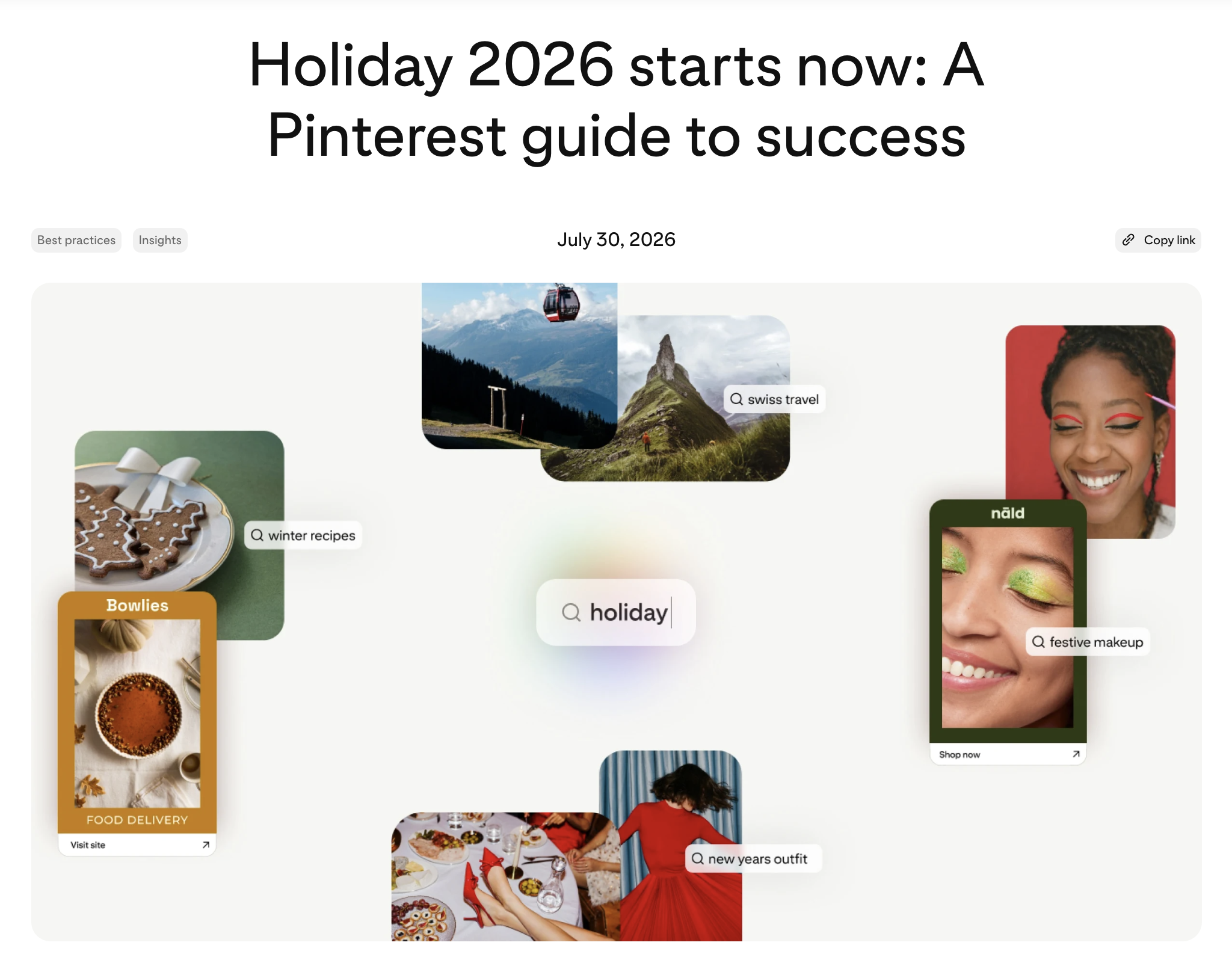
What Does This Mean For You?
Every week you wait in Q4, the cost of reaching the same person goes up. More competition, same audience, higher price.Starting early gives you time to test what works before ad prices spike. Starting late gives you no room to learn anything.US advertisers will spend $71.09 billion on digital retail advertising in 2026, up from $60.32 billion in 2025. [eMarketer, 2026] You're not competing against last year's budgets. You're competing against a market that's 18% bigger and just as hungry for the same audience.
THE TAKEAWAY:
Starting late doesn't just mean missing customers. It means paying more to reach fewer of them.
3. CREATORS BOOK UP, YOUR BEST OPTIONS DON'T WAIT
By the time most brands are ready to brief creators for the holidays, the ones they actually want are already committed to someone else.

27% of creators cited late outreach as their biggest obstacle to a good holiday campaign. [Later, 2026] The creators whose recommendations actually convert are not waiting around for last-minute briefs.
EXAMPLE:
Later's 2026 research found that fixed holiday budgets rose from 30% to 49% of brands, meaning less room to react when timelines compress. [Later, 2026] Brands that locked in creator relationships early briefed well and went live before the most competitive windows opened. Brands that reached out late overpaid for rushed deliverables or settled for second-tier options.
What Does This Mean For You?
Start creator outreach for holiday campaigns in August or September at the latest. By October, the best talent is already committed.A well-briefed creator with three weeks of lead time will outperform a rushed creator with three days. The content quality difference is significant.Creator-brand alignment dropped from 52% to 41% as a stated brand priority in 2026. [Later, 2026] The brands losing ground on alignment are the ones briefing late and accepting whoever is available.
THE TAKEAWAY:
The creator ecosystem books up like a venue. If you're not on the calendar early, you're playing with whoever's left.
BONUS: THE HOLIDAY SEASON IS LONGER THAN YOU THINK
By the time Black Friday arrives, consumers have already been exploring options, comparing brands, and saving ideas. [tvScientific by Pinterest, 2026] Waiting until November means entering the market after many consumers have already begun purchasing. The season is not Q4. It's the entire second half of the year.
What Does This Mean For You?
Spring and summer moments are real revenue opportunities, not warm-up acts. Mother's Day, back-to-school, and Labour Day are all moments where you can reach buyers before Q4 competition drives costs up.Map your full year by moment, not by quarter. Each campaign teaches you something that makes the next one cheaper and more effective.Every moment on the calendar is a campaign opportunity we can help you build. From Valentine's Day to Black Friday, the brands that plan for each one arrive at peak season with an audience that already knows them.
THE TAKEAWAY:
The holiday season doesn't start when you launch your campaign. It starts when your customer starts thinking about buying.
The brands winning this holiday season aren't the ones with the biggest budgets. They're the ones that started planning when everyone else was still finishing summer.

Earlier means cheaper inventory, better creator relationships, and warmer audiences. It's not a nice-to-have. It's the strategy.